Showing posts with label Travel. Show all posts

Sunday, 7 June 2015

A Naga Sojourn

By Bhudeb Chakrabarti
Nagaland, well-known for its natural beauty and breath-taking pristine natural forests is also known for its warm and hospitable people. In December 1968, I was posted in Pfutsero in Kohima District of Nagaland, as Second-in-Command of a CRPF Battalion. The Battalion was deployed to aid the Government of Nagaland in maintaining Law and Order.

Pfutsero
Pfutsero, Nagaland | Image credit : touristlink.com


Monday, 30 March 2015

Darjeeling Himalayan Railways in the 19th century - Vintage Pictures

By Somali K Chakrabarti
"Mere Sapno Ki Rani kab aayegi tu...."
This romantic Hindi song from the movie Aradhana, had enchanted hundreds of thousands of people from all over India in the 70s. Sitting atop an open jeep, Rajesh Khanna, crooned the lively song to woo Sharmila Tagore, who sat reading a book in the Toy Train, as the miniature steam engine chugged uphill in the scenic settings of Darjeeling.
The "Toy Train" on the Darjeeling Himalayan Railway (DHR) line has been a unique feature of Darjeeling since the 19th century. Ferrying between Darjeeling and Ghoom (India's highest railway station), the Toy Train moves through the hilly terrain absorbing the magnificent beauty of Darjeeling hills.
Inscribed as a World Heritage Site by UNESCO in 1999, DHR became the first Hill Railway in India, and the second in the world to be accorded this status.
Here are some vintage pictures of the Darjeeling Himalayan Railway from the 19th century.

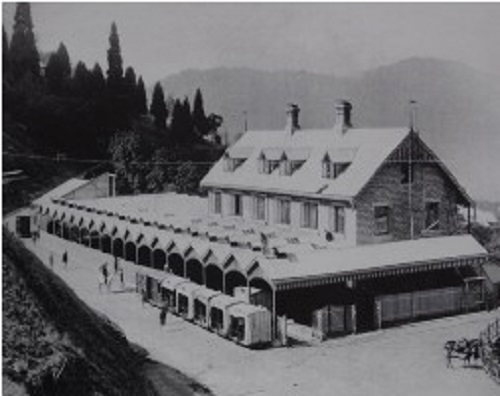
Darjeeling Station, ca 1891

Darjeeling Station 1891
Photograph of Darjeeling Station, ca 1891
Darjeeling was the chief summer resort for the British government in Bengal.

Saturday, 14 March 2015

Dima Hasao - Dreamland of Assam

By Bhudeb Chakrabarti

The Birds Mystery

Jatinga, a scenic village nestled among the Borail Hills range in the Dima Hasao District of Assam, is known for a strange eerie phenomenon. During misty and foggy days in the months of September to November, each year, thousands of birds come to this valley and crash to their death. As the sun sets, huge number of birds descend on the village and fly full speed, smashing against buildings and trees, to drop dead.
Jatinga Birds Mystery
Jatinga Birds Mystery | Image Source :sify.com

People from all over the world come to see this mysterious annual phenomenon of suicide by disoriented birds, which lies unexplained so far. The renowned ornithologist Dr Salim Ali had noted,
“The most puzzling thing about the phenomenon is that so many species of diurnal resident birds are on the move when, by definition, they should be first asleep.”
This weird mass suicide phenomenon of birds has earned Jatinga the name of Death Valley for Birds.

Thursday, 12 February 2015

Forts and Palaces in Rajasthan - Pictures from the 19th century Part II

By Somali K Chakrabarti
"And here, over the portals of my fort,
I shall cut in stone the word
which is to be my beacon and my banner.
The word which will not die should we all perish in battle.."
-  Ayn Rand, The sacred word
Taking on from my last post on Forts and Palaces in Rajasthan - Pictures from the 19th century  Part I, here I continue further with the imaginary leap back in time, and present pictures and photographs from the 19th century of the historic forts and palaces of Chittorgarh, Udaipur, Bundi, Jodhpur, Bikaner  and Jaisalmer. 
.

Palace of Bheem and Padmini, Chittorgarh, ca 1885

Palace of Rana Bhim and Padmini, Chittaurgarh,1829

Engraving of Padmini's Palace in Chittorgarh, by Edward Francis Finden and Patrick Young Waugh, ca 1829


Chittorgarh was the capital of the Mewar kingdom from the 8th to the mid-16th century.


Continue Reading......

Wednesday, 28 January 2015

Forts and Palaces in Rajasthan - Pictures from the 19th century Part1ontinue Reading

By Somali K Chakrabarti
“Sublime wonders lie in store,
I am shown a regal residence;
a mighty kingdom, an empire
with more grandeur than before ...”  
- E.A. Bucchianeri, Poetry for the Phantom of the Opera
Forts and palaces never fail to fascinate me. These rare examples of architecture offer a glimpse into the past grandeurs and reveal many a story of kings and their kingdoms, the wars they fought, the courts they held, and the way they lived.
Here are some pictures and photographs from the 19th century that capture the oriental magnificence of the historic forts and palaces of Rajasthan.
.

Amber Fort, ca 1860

Amber Fort, ca 1860
Amber Fort, part of Raj mahal & Maota Lake, watercolours by William Simpson ca.1860
Eleven kilometres to the north of Jaipur, is the town of Amber.
The impressive fort and the palace complex, on a hill overlooking the Maota Lake was built at Amber, in the late 16th century by Akbar's famous general, Raja Man Singh (ruled 1592- 1614). Alterations and additions to the palace structures continued throughout the 17th century and beyond, until the fort was finally abandoned in 1727.

Tuesday, 6 January 2015

Chennai in the 19th century – Vintage Pictures

By Somali K Chakrabarti
A city with a curious blend of tradition and modernity, Chennai has a rich historical legacy.
Formerly known as Madras, Chennai was a leading urban location and naval base, at the time of the British rule. Madras derives its name from Madrasapattnam, a fishing village located on the Coromandel Coast, where the British East India Company had first built a trading post in 1639, and followed it up with the construction of Fort St. George.
At that time, the weaving of Cotton fabrics was a local industry and the English invited
the weavers and native merchants to settle near the Fort. Businesses flourished on the crowded streets of the province known as George Town.
Here are a few pictures from the yore.

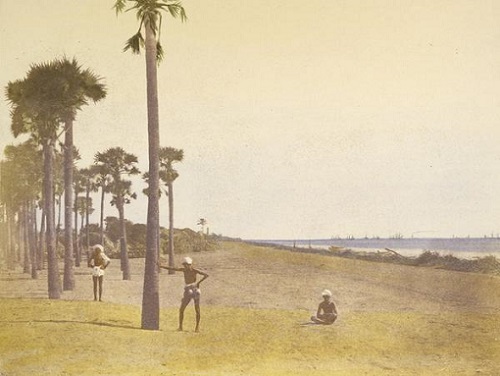
Outskirts of Madras, ca 1851

Outskirts of Madras, 1851

Friday, 28 November 2014

Delhi in the 19th century - Vintage Pictures

By Somali K Chakrabarti

I asked my soul: What is Delhi? She replied: The world is the body and Delhi its life. ~ Mirza Ghalib
An excerpt from Delhi : A Novel, by Khushwant Singh.

Delhi, a city with a rapidly changing skyline, has been a part of India’s ancient history.
Indraprastha, the legendary capital of Pandavas, is described in the epic Mahabharat and it is believed to have existed where the present day New Delhi is.
The city that has witnessed the rule of many dynasties over centuries, has been plundered, destroyed and rebuilt several times.
Hindu kings from the dynasties of the Maurya, Kushan, Gupta, Tomar Rajputs and Chauhan Rajputs ruled Delhi till the 12th century. The end of the 12th century saw the onset of the Delhi Sultanate, and marked the beginning of the rule of Islamic rulers including Ghori, rulers from the Mamluk (Slave) dynasty, Khiljis, Tughlaks, Lodi, and later on the Mughals.
Delhi passed into the direct control of British Government in 1857 after the First War of Indian Independence, and became the capital of British India in 1911.
Here is a collection of Vintage Pictures of Delhi from the 19th century. The pictures are mostly of the architectural structures of the British and Mughal period, most of which exist till date.
New Delhi, designed by Edwin Lutyen and some other brilliant architects such as Robert Tor Russell, E. Montague Thomas, Herbert Baker, did not exist in the 19th century and was inaugurated in 1931.
.

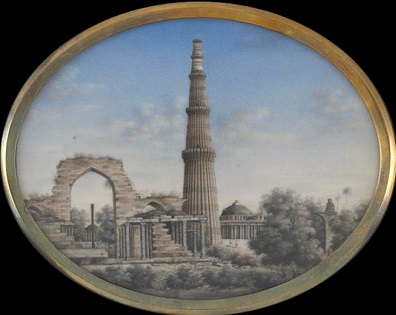
VIEW OF QUTB - DELHI , ca 1850

Delhi - Qutb 1850
Watercolours, painted on ivory plaques with the views of Qutb, Delhii by unknown artist ca.1850

Qutb Minar, the world's tallest brick minaret at 72.5 metres, was built in 1193 by Qutb-ud-din-Aibak, the first Muslim ruler of Delhi. Qutab-ud-din Aibak commenced the construction of the Qutab Minar, but could only finish the basement. His successor, Iltutmush, added three more storeys, and in 1368, Firoz Shah Tughlak constructed the fifth and the last storey.

Continue Reading.....

Thursday, 20 November 2014

Baliyatra - commemorating ancient maritime traditions

By Somali K Chakrabarti

Festivals to commemorate ancient maritime traditions in South East Asia

.
  • Baliyatra, meaning a 'Voyage to Bali', is a festival celebrated every year in coastal Orissa on Karthika purnima, the Full moon day of October-November to commemorate Orissa’s glorious maritime history.
  • Masakapan Ke Tukad, is a Balinese festival where toy boats are floated in memory of maritime ancestors.
  • Loy Brah Prahdip or LoyKrathong, meaning 'the floating of lamps at night', is a festival of Thailand that is celebrated in December (twelfth month of Kartika). During this festival, little rafts, made of plantain stems and decorated with flags, paper umbrellas, incense sticks, and lighted candles, with offerings of food and flowers, are set adrift on the river by people living near its banks.
Three festivals, with similar celebrations consisting of ritualistic floating of toy boats, are celebrated in three different countries, in memory of ancient mariners, who undertook trans-oceanic voyages from Orissa to South East Asian countries including Indonesia and Thailand.

bali-jatra
Image Source : eodisha.org

Past cultural and commercial connections between Orissa and South East Asia

boita-bandana-for-sadhabas
Boita-bandana  Image Source : eOdishaOrg


Saturday, 8 November 2014

Why the World is more Indian than you think

By Somali K Chakrabarti


China targeting Indian wedding market                                                                                                                                                               -  The Economic Times on 18th Oct, 2014

This catchy headline in 'The Economic Times' was hard to miss. On reading the article, I found that the glamour of Indian weddings has allured the Chinese, and they see a lucrative market and viable business opportunity in the lavish wedding celebrations.

Here’s an excerpt from the article.
Impressed by the lavish Indian weddings, Chinese Consul General Wang Xuefeng said his country was aggressively marketing several of its cities like Kunming, Lijiang and Dali as attractive wedding destinations.
Many Indian families are now going to Thailand, Dubai and Mauritius for weddings, but now they are also looking towards China which has several beautiful cities like Kunming which is called the city of spring for its beautiful weather, Lijiang as the city of romance and Dali famous for its pagodas," Wang said on the sidelines of a programme.
Wang said talks were on with Indian companies and tour operators for collaborations with their Chinese counterparts for organising the weddings in China.

So, as some Indian couples plan for a grand wedding in China, China is setting up several restaurants to dish out Indian delicacies.
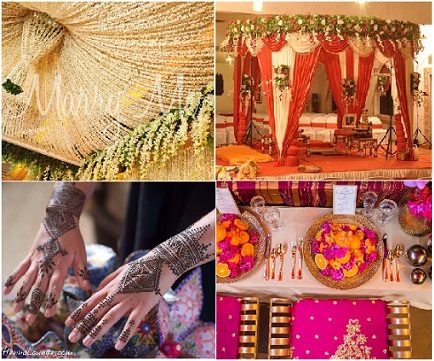
Indian Wedding
Big fat Indian wedding

'Apt time to write this post!', I thought.
With the Indianness quotient increasing by the day, it is apparent that:

The world is getting more 'Indianized' than we think.


Thursday, 6 November 2014

Kolkata in the 19th century - Vintage Pictures

By Somali K Chakrabarti


Kolkata, the 'City of Joy', is a city with a glorious past!

For those who live there, Kolkata is also about its alluring spirit, emotions, heightened sensibilities and creative energy. It is a city with fabulous heritage architecture where the old merges with the new.

Going back a bit into the history of Kolkata (previously Calcutta), we find that Calcutta was developed by the British by merging three villages - Kalikata, Sutanati and Gobindapur. Calcutta became the headquarters of the East India Company by 1772 and was the capital of British India, from 1858 to 1911, before the British relocated their capital to Delhi.

The 19th century saw a socio-cultural resurgence and intellectual awakening in Kolkata, known as the Bengal Renaissance, which continued up to the early 20th century. During this time prominent literati of the city contributed immensely to the art, architecture, literature, science and philosophy.

Charles D'Oyly, (1781–1845), a public official of the British East India Company, and painter from Dhaka produced numerous images on India. In 1848, Dickinson & Co., London published his drawings of Calcutta in a large folio-size book titled Views of Calcutta and its Environs.

Here are some vintage pictures depicting the landscape of Kolkata from the 19th century.
.

ON THE RIVER - INDIA , by Sir Charles D'Oyly ca 1815

ON THE RIVER - INDIA 1815
From ‘Views of Calcutta and its Environs’