Monday, 30 March 2015

Darjeeling Himalayan Railways in the 19th century - Vintage Pictures

By Somali K Chakrabarti
"Mere Sapno Ki Rani kab aayegi tu...."
This romantic Hindi song from the movie Aradhana, had enchanted hundreds of thousands of people from all over India in the 70s. Sitting atop an open jeep, Rajesh Khanna, crooned the lively song to woo Sharmila Tagore, who sat reading a book in the Toy Train, as the miniature steam engine chugged uphill in the scenic settings of Darjeeling.
The "Toy Train" on the Darjeeling Himalayan Railway (DHR) line has been a unique feature of Darjeeling since the 19th century. Ferrying between Darjeeling and Ghoom (India's highest railway station), the Toy Train moves through the hilly terrain absorbing the magnificent beauty of Darjeeling hills.
Inscribed as a World Heritage Site by UNESCO in 1999, DHR became the first Hill Railway in India, and the second in the world to be accorded this status.
Here are some vintage pictures of the Darjeeling Himalayan Railway from the 19th century.

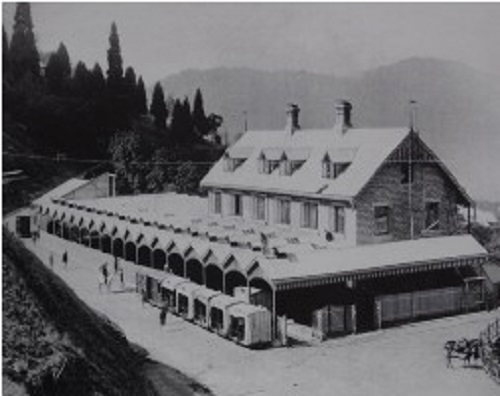
Darjeeling Station, ca 1891
Darjeeling Station 1891
Photograph of Darjeeling Station, ca 1891
Darjeeling was the chief summer resort for the British government in Bengal.

Friday, 27 March 2015

Lucknow in the 19th century - Vintage Pictures

By Somali K Chakrabarti
Lucknow, the city of Nawabs, was also once the city of adab and tehzeeb (etiquette and manners).
Refined speech, manners, art, literature, poetry and "Nawabi" style cuisines once marked the culture of the city.
The capital city of Uttar Pradesh, on the bank of River Gomati, has a cultural legacy shared by Hindus and Muslims, with a strong influence of Persian court culture. The nobility consisted mainly of Shiite Muslims, who traced back their ancestry to Persia.
Peppered with Persian vocabulary and idioms, Udru language spoken in Lucknow was known for its elegance, expressiveness and extreme politeness. Lucknow Urdu played a key role in the city's cultural milieu.
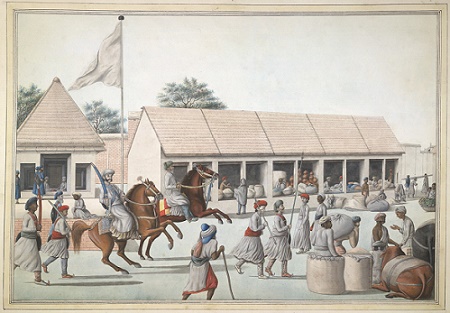
Street scene , Lucknow, 1800
Street scene in Lucknow, with shops and traders and a horseman
Lucknow first attained prominence in the 15th century under the sultans of Jaunpur. Later it was ruled by Mughal governors. By the 17th century, Lucknow was a prosperous commercial centre, and continued to flourish till 1856 as the capital of the independent Nawabs of Avadh (originally governors under the Mughals).

Wednesday, 25 March 2015

How Technology has aided the World Cup Cricket

By Somali K Chakrabarti
On 13 February, the opening of the 2015, ICC World Cup Cricket tournament, one of the world's most viewed sporting events, was celebrated with a Google Doodle. The tournament has come up a long way from the time when the first Cricket World Cup was played in England in 1975. And how!
Google Doodle Cricket Icc World Cup
Google Doodle Cricket Icc World Cup 2015
Back in the seventies and early eighties, when all the matches were played during the day, people would gather around the Television or radio sets to watch the match, or at least to listen to the commentary. The games were slow paced and the hangover of the 5-day Test Matches could be seen in the World Cup too. Players dressed in traditional white uniforms played 60 overs per team, with red balls.

Saturday, 14 March 2015

Dima Hasao - Dreamland of Assam

By Bhudeb Chakrabarti

The Birds Mystery

Jatinga, a scenic village nestled among the Borail Hills range in the Dima Hasao District of Assam, is known for a strange eerie phenomenon. During misty and foggy days in the months of September to November, each year, thousands of birds come to this valley and crash to their death. As the sun sets, huge number of birds descend on the village and fly full speed, smashing against buildings and trees, to drop dead.
Jatinga Birds Mystery
Jatinga Birds Mystery | Image Source :sify.com

People from all over the world come to see this mysterious annual phenomenon of suicide by disoriented birds, which lies unexplained so far. The renowned ornithologist Dr Salim Ali had noted,
“The most puzzling thing about the phenomenon is that so many species of diurnal resident birds are on the move when, by definition, they should be first asleep.”
This weird mass suicide phenomenon of birds has earned Jatinga the name of Death Valley for Birds.

Tuesday, 10 March 2015

Why Storytelling is a Powerful Business Skill

By Somali K Chakrabarti
I am not an avid TV watcher, but often when I do, a remarkable advertisement ‘Will of Steel’ never fails to catch my eyes.
This advertisement shows a girl, in a village in Haryana, getting up in the morning, putting on her shoes, and going out for a run, followed by practising crunches and weight lifting. Another lady in the house is shown lighting incense sticks, sweeping the house, washing clothes and preparing food.
Geeta Phogat - Will of Steel
Will of Steel
A background commentary in rustic Haryanvi language sermons the duties of a woman.
A woman must get up before the sunrise, offer prayers and get into the kitchen to get on with the household chores.

Continue Reading.....

Tuesday, 3 March 2015

Social Media on Mobile - Convenience or Addiction?

By Somali K Chakrabarti
You are what you share.  - C.W. Leadbeater
 
The above saying has gained relevance, more than ever before, in this age of social media. Breaking the barriers of age, hierarchy, gender, status and geography, social media allows us to express our views, share ideas, bridge distances and connect with like minded people.
I have to admit that I have taken to social media like a fish takes to water.
Giphy
Giphy
Social media has become an integral part of my life, to the extent, that a day without social media now appears to me almost like a day without electricity.


Friday, 27 February 2015

A Mission in Mizoram

By Bhudeb Chakrabarti
The monsoon set in quite early this time in the high hills of Mizoram. It was raining incessantly throughout the day and night in the middle of July 1986. Zemabawk, on the outskirt of Aizawl, was the location of CRPF headquarters. I was posted as DIG CRPF, responsible for overseeing the operations of all CRPF battalions deployed in Mizoram.
 

The Mission

On 30 June, 1986, the Govt of India had signed a “Peace Accord” with the Mizo National Front (MNF) ending the two-decade old insurgency in the ”Land of the Highlanders”.
CRPF was assigned the mission to receive MNF cadres at designated places and take over their arms and ammunitions for handing over to the Army. Subsequently the MNF cadres were to be escorted to a Peace Camp “Remna Run” on a high ridge near Tui- Vamit-Tlang, a windy village, at one extreme end of Aizawl.
Parva and Marpara were the two earmarked places through which the MNF returnees were to enter Mizoram from Bangladesh and lay down their arms and ammunitions.
 

The Terrain

Aizawl, set on the ridges of steep hills is flanked by the lofty peaks of the beautiful Durtlang Hills.
Durtalang Hills , Mizoram
Durtalang Hills , Mizoram | Image Source : misual.com